
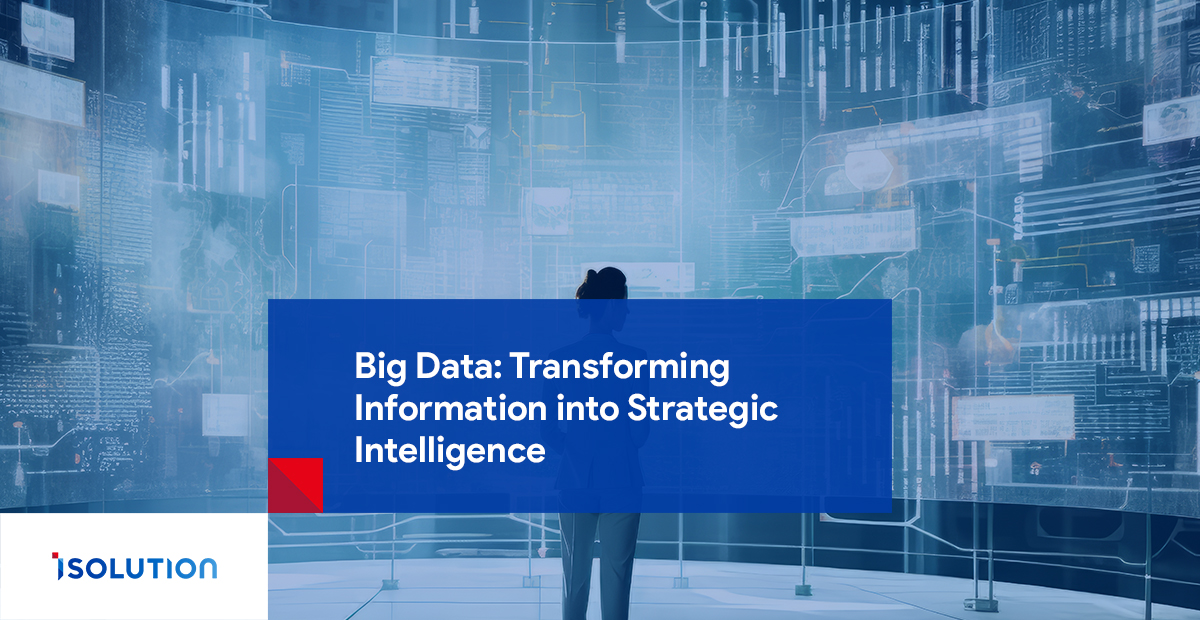
In today’s digital-first economy, organizations generate and process vast volumes of data at an unprecedented pace. From customer interactions and IoT devices to enterprise systems and social platforms, data has become one of the most valuable business assets. This surge has given rise to what is commonly known as Big Data, a term that goes beyond sheer volume to encompass the complexity, speed, and diversity of modern data streams. Effectively leveraging Big Data is no longer optional; it is a strategic necessity for organizations aiming to remain competitive, agile, and innovative.
Understanding Big Data
Big Data is typically defined through the framework of the “5 Vs”:
- Volume: Massive amounts of structured and unstructured data generated every second.
- Velocity: The speed at which data is created, processed, and analyzed in real time.
- Variety: Diverse data formats, including text, images, videos, sensor data, and more.
- Veracity: The reliability and accuracy of data, which directly impacts decision-making.
- Value: The ability to extract meaningful insights that drive business outcomes.
Traditional data processing tools are often insufficient to handle these dimensions, which is why modern Big Data technologies, such as distributed computing frameworks, cloud platforms, and advanced analytics, have become essential.
The Role of Big Data in Modern Business
Organizations across industries are leveraging Big Data to enhance decision-making and uncover opportunities that were previously inaccessible. Rather than relying on intuition or limited datasets, leaders can now make data-driven decisions backed by real-time insights.
In marketing, Big Data enables hyper-personalization by analyzing customer behavior, preferences, and engagement patterns. This leads to more targeted campaigns, improved customer experiences, and higher conversion rates. In finance, it supports fraud detection and risk management by identifying anomalies and patterns in transaction data. In healthcare, it facilitates predictive analytics for disease prevention, patient care optimization, and operational efficiency.
Moreover, Big Data plays a critical role in operational excellence. Businesses can monitor supply chains, predict equipment failures, and optimize processes through data-driven insights, reducing costs and improving efficiency.
Key Technologies Behind Big Data
The effectiveness of Big Data relies heavily on the technologies that support its storage, processing, and analysis. Some of the most prominent include:
- Distributed Storage Systems: Technologies like Hadoop Distributed File System (HDFS) allow organizations to store massive datasets across multiple nodes.
- Data Processing Frameworks: Tools such as Apache Spark enable fast and scalable data processing.
- Cloud Computing: Cloud platforms provide flexible, scalable infrastructure to manage and analyze Big Data without heavy upfront investment.
- Data Warehousing & Lakes: Modern data architectures, including data lakes, allow organizations to store raw data in its native format for future analysis.
- Artificial Intelligence & Machine Learning: These technologies enhance Big Data by uncovering patterns, making predictions, and automating decision-making processes.
Challenges in Big Data Implementation
Despite its advantages, implementing Big Data strategies comes with challenges. One of the most significant is data integration, combining data from multiple sources into a unified system. Organizations also face issues related to data quality, governance, and security. Poor data quality can lead to inaccurate insights, while inadequate governance can result in compliance risks.
Another critical challenge is the shortage of skilled professionals. Data scientists, engineers, and analysts are essential for extracting value from Big Data, yet they remain in high demand and short supply. Additionally, organizations must ensure that their teams can interpret data correctly and translate insights into actionable strategies.
Privacy and ethical considerations are also increasingly important. With stricter regulations and growing public awareness, businesses must handle data responsibly, ensuring transparency and compliance with data protection laws.
Big Data and Digital Transformation
Big Data is a cornerstone of digital transformation. It empowers organizations to innovate, adapt, and scale in rapidly changing markets. By integrating Big Data into their operations, companies can shift from reactive to proactive strategies, anticipating trends, understanding customer needs, and responding in real time.
For example, predictive analytics can forecast demand, enabling businesses to optimize inventory and reduce waste. Similarly, real-time analytics can enhance customer support by providing instant insights into user behavior and preferences.
Furthermore, Big Data supports the development of new business models. Data-driven services, subscription models, and personalized offerings are all made possible through advanced analytics and data insights.
The Future of Big Data
As technology continues to evolve, the role of Big Data will only become more significant. Emerging trends such as edge computing, real-time analytics, and AI-driven automation are reshaping how data is processed and utilized. Organizations are moving toward more decentralized data processing models, enabling faster decision-making and reduced latency.
Data democratization is another key trend, allowing non-technical users to access and analyze data through user-friendly tools. This shift empowers employees across departments to make informed decisions without relying solely on data specialists.
Additionally, the integration of Big Data with technologies like the Internet of Things (IoT) and blockchain is opening new possibilities for innovation, transparency, and efficiency.
Conclusion
Big Data is not just a technological advancement.it is a strategic enabler that drives growth, innovation, and competitive advantage. Organizations that successfully harness its potential can unlock valuable insights, improve decision-making, and deliver superior customer experiences.
However, success with Big Data requires more than just technology. It demands a clear strategy, skilled talent, strong governance, and a culture that values data-driven thinking. As businesses continue to navigate an increasingly data-centric world, those who invest in Big Data capabilities will be better positioned to lead, adapt, and thrive.
Reference:
McKinsey Global Institute. “Big Data: The Next Frontier for Innovation, Competition, and Productivity.”





Leave a Comment